 Send Inquiry
 Send SMS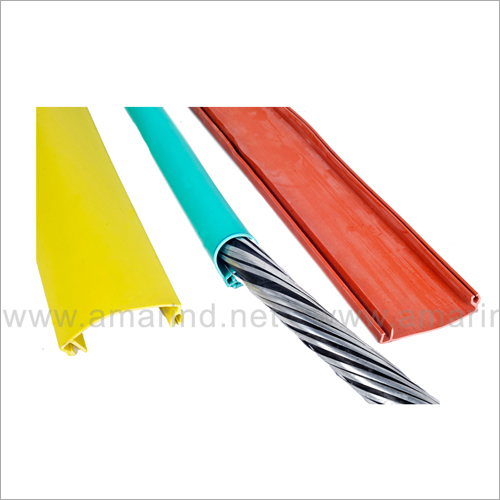
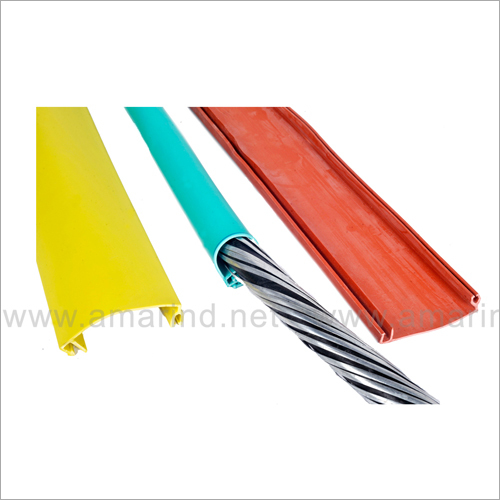
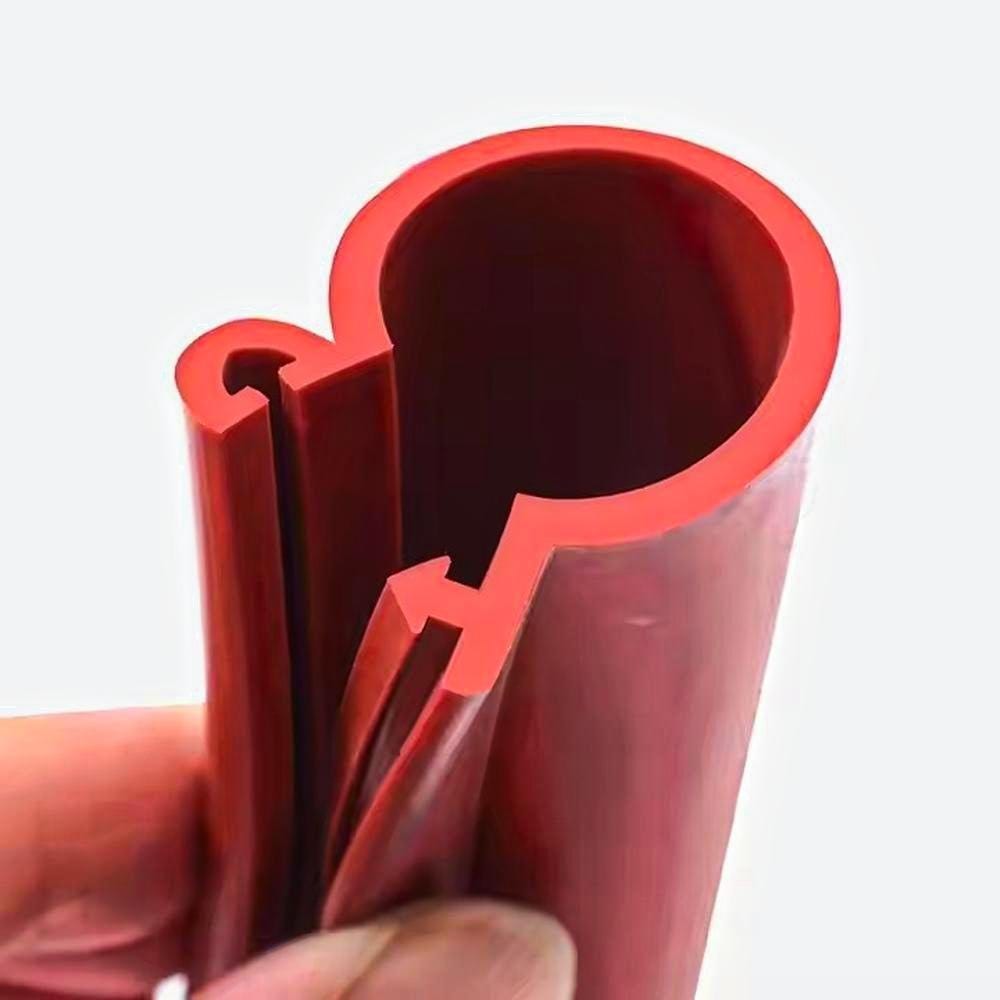
Overhead Line Insulation Sleeve (OLIS)
200.0 INR/Piece
Product Details:
- Surface Treatment Smooth, UV stabilized
- Layer Single or double, as per requirement
- Coating Type Single layer or dual coating
- Installation Guideline Install manually over overhead conductors during shutdown or live line using tools
- Density 1.5 Gram per cubic centimeter(g/cm3)
- Size Custom length and diameter as per conductor size
- Thermal Conductivity Very low, minimizes heat transfer
- Click to View more
X
Overhead Line Insulation Sleeve (OLIS) Price And Quantity
- 200.0 INR/Piece
- 1000 Piece
Overhead Line Insulation Sleeve (OLIS) Product Specifications
- 1.5 Gram per cubic centimeter(g/cm3)
- Overhead Line Insulation Sleeve (OLIS)
- Up to 105C
- Yellow, Red, Green, Customizable
- 11 kV to 33 kV
- Custom length and diameter as per conductor size
- Single or double, as per requirement
- Smooth, UV stabilized
- Install manually over overhead conductors during shutdown or live line using tools
- Insulation of exposed overhead conductors and jumpers, prevention of bird-related faults
- Single layer or dual coating
- 25 mm to 100 mm
- 12 MPa
- Low, for insulation
- UV resistant, weatherproof, high dielectric strength, anti-tracking
- Very low, minimizes heat transfer
- Over 20 kV/mm
- 2 mm to 5 mm
- Polyvinyl Chloride (PVC) or H.D. Polymer
- -20C to +105C
- Yes
- < 0.2%
- 10-15 years (outdoor)
- Store in dry, shaded area
Overhead Line Insulation Sleeve (OLIS) Trade Information
- 1000 Piece Per Day
- 1-15 Days
Product Description
Overhead Line Insulation Sleeve (OLIS)
Overhead Line Insulation Sleeve (OLIS) is a highly tensile stretchable rubber element which used as a jacket around the electric power transmission line of the overhead cranes and wide range of other industrial machineries. This protection unit gives protection against shot circuit to prevent machine breakdown and accidents due to electricity. Top quality synthetic polymers are used for the manufacturing of this sleeve which makes it highly durable and resistant to bends.
Product Details
Properties | Value | Standard |
|---|---|---|
Physical | ||
Tensile Strength | 11 N/mm (MPA)(min.) | ASTM D 412-06a |
Ultimate Elongation | 375% (Min.) | ASTM D 412-06a |
Hardness | 80 10 Shore A | ASTM D2240 |
Water Absorption | 0.5 % (max.) | ASTM D570 |
Thermal | ||
Thermal Impact | 120C 2C / 4Hrs | No Cracking/Flowing |
Low Temperature Flexibility | -40C / 4Hrs | No Cracking/Flowing |
Electrical | ||
Dielectric Strength | 23 KV/mm. (Min.) | ASTM D149 |
Breakdown Voltage (kV) | 45 KV (Min.) | ASTM D149 |
Volume Resistivity | 1 x 10¹⁴ Ohm.cm | ASTM D257 |
Dielectric Constant | 5 (Max.) | ASTM D150 |
High Dielectric Strength for Enhanced Protection
With a dielectric strength of 18 kV/mm, OLIS provides reliable electrical insulation and minimizes the risk of leakage currents or short circuits. The sleeves' breakdown voltage exceeding 20 kV/mm ensures maximum safety, even under demanding electrical loads common in utility and industrial environments.
Weatherproof and UV Resistant for Longevity
OLIS sleeves are constructed from UV-stabilized materials, offering resistance against solar exposure, moisture, and challenging outdoor conditions. Their weatherproof, anti-tracking characteristics make them suitable for long-term field installations, preserving their insulating properties for 10-15 years.
Installation Versatility and Customization Options
Available in various widths, thicknesses, and colors, these sleeves support customized lengths and diameters as per the conductor size. Installation can be performed manually during routine shutdowns or on live lines using suitable tools, ensuring flexibility across multiple project requirements.
FAQ's of Overhead Line Insulation Sleeve (OLIS):
Q: How do I install the Overhead Line Insulation Sleeve (OLIS) on overhead conductors?
A: OLIS installation involves slipping the sleeve over the exposed conductors or jumpers, either manually during a power shutdown or on live lines with specialized tools. It is crucial to ensure the sleeve fits snugly around the conductor and is positioned securely as per installation guidelines for optimal insulation.Q: What benefits does OLIS provide for overhead power lines?
A: OLIS protects overhead conductors from environmental exposure, bird-related faults, and accidental contacts. It delivers high dielectric and mechanical strength, is self-extinguishing, weatherproof, and UV resistant, significantly increasing safety and extending the service life of power lines.Q: When should OLIS be replaced or checked for maintenance?
A: OLIS sleeves have a life expectancy of 10-15 years outdoors but should be inspected during routine maintenance for signs of wear, UV degradation, or mechanical damage. Replacement is recommended if physical defects or loss of insulating properties are detected.Q: Where should OLIS be stored before installation?
A: Store OLIS sleeves in a dry, shaded area to prevent moisture absorption and UV exposure. Proper storage ensures the material retains its mechanical and insulation properties prior to use.Q: What materials and specifications are available for OLIS?
A: OLIS is available in premium PVC or high-density polymer, comes in widths from 25 mm to 100 mm, thicknesses from 2 mm to 5 mm, and supports rated voltages from 11 kV to 33 kV. Color and length can be customized based on application requirements.Q: How does OLIS contribute to electrical safety and performance?
A: By providing insulation with a dielectric strength of 18 kV/mm and a breakdown voltage above 20 kV/mm, OLIS minimizes risks of electrical leakage, arc faults, and enhances network reliability. Its anti-tracking and flame-retardant features further improve operational safety.Tell us about your requirement

Price:
Quantity
Select Unit
- 50
- 100
- 200
- 250
- 500
- 1000+
Additional detail
Mobile number
Email

Other Products in 'Overhead Line Insulation Sleeve (OLIS)' category

Register As New Dealer
Contact Details
AMAR INDUSTRIES
GST : 24AABPG9073G1ZV
GST : 24AABPG9073G1ZV

Address
- 2, Sarvodaya Industrial Estate, Mu. Khatamba, P.O. Ankhol, Near Waghodia Chokadi,Vadodara - 390019, Gujarat, India
- Phone :07313726398

 Send Inquiry
|


 |
AMAR INDUSTRIES
All Rights Reserved.(Terms of Use) Developed and Managed by Infocom Network Private Limited. |
